
A home can look completely fine and still have issues hiding behind the walls.
In fact, the U.S. Department of Energy estimates that the average home loses up to 30% of its heating and cooling energy due to air leaks and missing insulation, problems you often can’t see during a walkthrough.
That’s what makes these issues tricky. There’s no obvious sign pointing you to the source.
Thermal imaging helps bridge that gap.
By detecting temperature differences, it gives inspectors a way to spot hidden moisture, insulation gaps, and electrical issues that would otherwise go unnoticed.
In this blog, we’ll break down the key problems infrared technology can catch and why it’s becoming a valuable part of modern inspections.
How Does Thermal Imaging Work
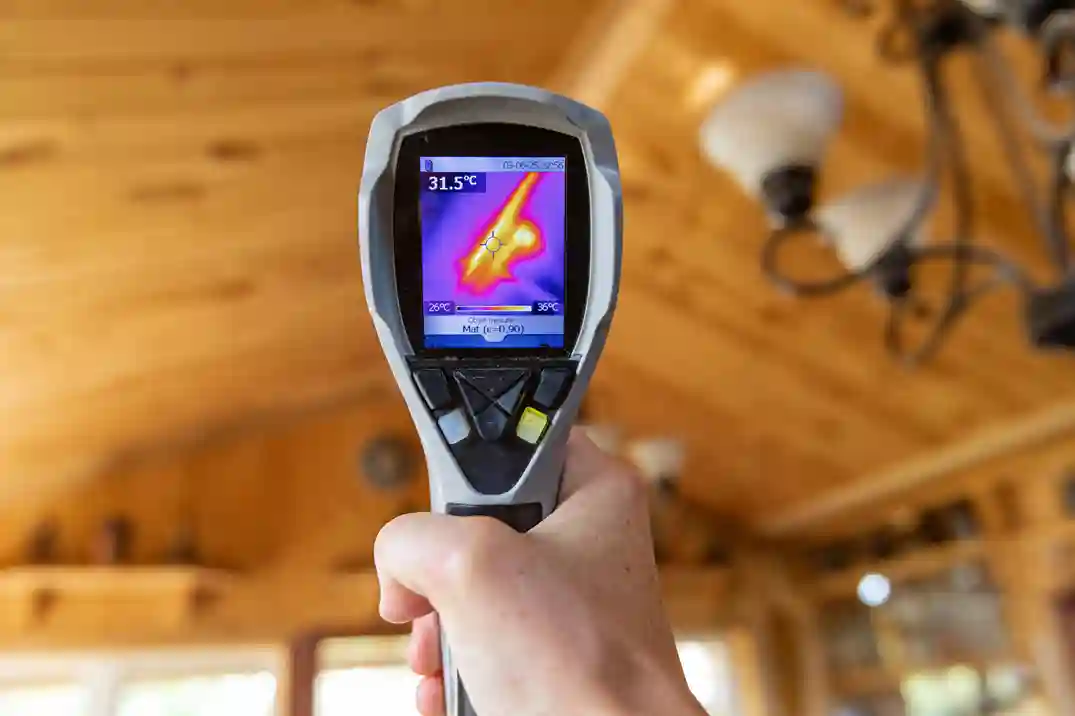
Think of an infrared inspection as having X-ray vision for heat. Every object emits some level of infrared radiation. A thermal camera translates that heat into a visual map. Blue and purple colors show cold spots. Yellow and red show heat.
It does not see through walls like a superhero. Instead, it looks at the surface temperature to tell a story about what is happening behind the scenes.
If a wall is cold in one specific spot, it usually means there is moisture or an insulation gap. If an electrical outlet is glowing bright red, you have a fire hazard.
Experts recommend using these tools to find energy leaks. You can check out their official guide on thermography for more details.
Now, let’s discuss 6 hidden problems these thermal cameras can detect.
1. Finding Hidden Water Leaks Before Mold Grows
Nothing destroys a home faster than water. It is the ultimate silent enemy. A tiny drip from an upstairs shower can sit inside your ceiling for months without you ever knowing it is there. If you are waiting for a brown stain to show up on the drywall, you have already lost the battle.
By that point, you aren’t just fixing a pipe. You are gutting the room to remove mold.
This is where a thermal camera pays for itself. It basically gives you X-ray vision for your walls. Because water and wood absorb heat differently, those hidden wet spots stand out as cold, dark blobs on the screen. It lets you catch leaks behind a dishwasher or around a window frame before they become a massive financial nightmare.
2. Finding the Invisible Fire Hazards
Electrical issues are even scarier because they are completely invisible. They are the stuff of actual nightmares. Every year, over 51,000 house fires are caused by some kind of electrical failure.
The worst part is that most people have no clue there is a problem until they smell smoke or see flames coming out of the wall. If a breaker is overloaded, it will show up as a hot spot on the camera. This is a clear sign that the electrical system is struggling or poorly installed.
Fixing a loose wire is cheap. Rebuilding a house after a fire is not.
3. Detecting Missing or Settled Insulation
This is the most common problem found during a thermal imaging home inspection. Builders sometimes get lazy and skip a corner. Over time, blown-in insulation can also settle. This leaves the top foot of your walls completely empty.
You can’t see this by just looking at the wall. But through the camera, those empty gaps look like giant blue streaks.
This is the difference between a cozy home and one that costs a fortune to heat. It gives you the evidence you need to ask the seller for a credit to have the insulation fixed.
4. Identifying Structural Issues and Gaps
Sometimes the “bones” of the house have issues that stay hidden for decades. If a header over a window is missing or damaged, it creates a thermal bridge. Air from the outside will leak through these structural gaps. This makes your HVAC system work twice as hard.
It is estimated that around 40% of heating and cooling energy is lost due to leaks in HVAC system ducts. Finding such issues early helps you understand the true condition of the home’s construction.
5. Finding Roof Leaks Without Climbing a Ladder
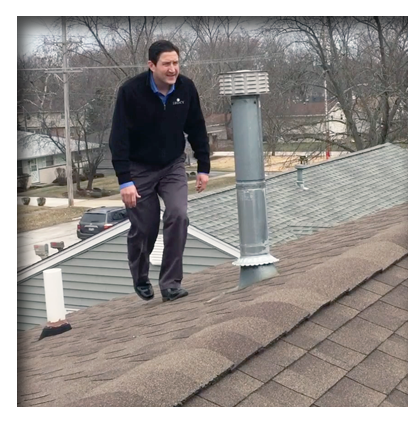
Roof inspections are usually done from the ground with binoculars or by walking on the shingles. Both methods can miss small soft spots.
After the sun goes down, the roof starts to cool. However, wet insulation under the shingles stays warm longer than dry insulation. An inspector can scan the roof and find these warm patches. It tells you exactly where the water is getting in, even if it hasn’t dripped through the ceiling yet.
A roof can look brand new but still have a major leak. The camera never lies.
6. Discovering Pest Infestations
Termites and other wood-destroying insects are active creatures. When they gather in large numbers, they actually generate heat.
In some cases, a large termite nest inside a wall will show up as a warm spot on an infrared scan. It can also detect moisture trails left by pests like carpenter ants. This does not replace a dedicated pest inspection. But it adds an extra layer of defense for your investment.
Why the Right Approach Matters
Some people think they can just buy a cheap thermal phone attachment and do it themselves. This is usually a mistake.
Professional cameras cost thousands of dollars and have much higher resolution. More importantly, an expert knows how to interpret the images. Sometimes a cold spot is just a shadow or a reflection from a window. You need a trained pro to tell the difference between a reflection and a leak.
Investing in this technology during your due diligence period is the smartest move a buyer can make. It takes the “maybe” out of the home-buying process.
Secure Your Investment Now
A home might look solid on the surface, but what’s hidden can make all the difference.
Thermal imaging adds another layer of insight, helping you catch issues that aren’t visible during a standard inspection. It’s a simple way to reduce uncertainty and avoid surprises later.
Legacy Inspection Group uses infrared technology to give you a more complete picture of the property, so you can move forward with better information.
If you’re preparing to buy, it’s worth taking that extra step to see what might otherwise be missed.