
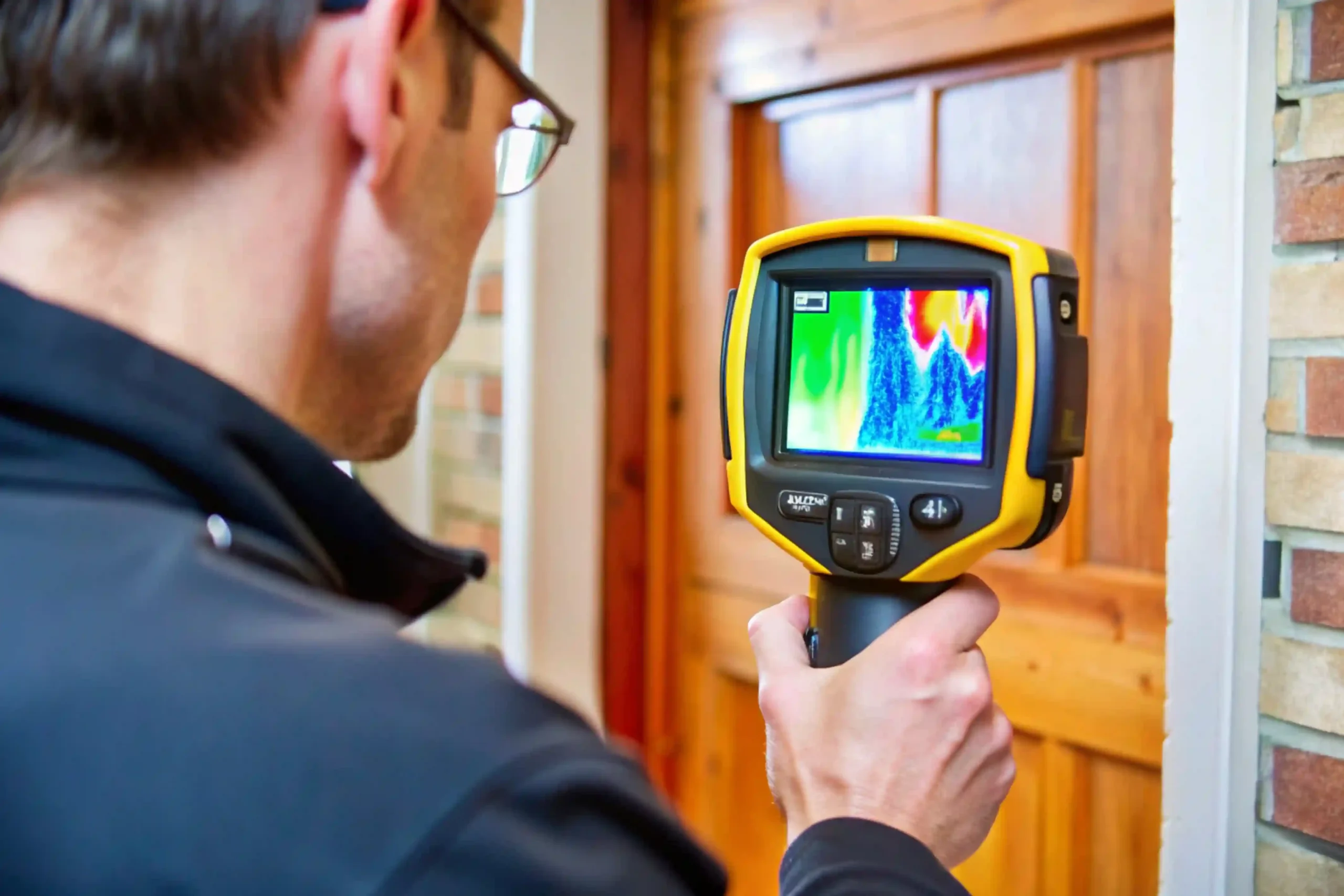
Not every problem in a home can be spotted with the naked eye. Drafty windows, missing insulation, and hidden moisture often go unnoticed during a standard inspection. That’s where thermal imaging makes a difference.
Thermal imaging detects temperature changes behind walls and around fixtures, revealing issues that could drive up energy bills or cause long-term damage. In this blog, we’ll explore how thermal imaging works, what it uncovers, and why it can be a game-changer for your home inspection.
What is Thermal Imaging on a Home Inspection
Thermal imaging, also known as a thermal camera inspection, utilizes an infrared camera to detect temperature variations on surfaces. Your home is inspected inside and out, including walls, ceilings, and hidden corners.
The images record temperatures of cold and hot spots that cannot be seen by the naked eye. These variations will indicate problems such as leaks, heating, or electrical hotspots.
What Can It Uncover
Here’s what is reported by real inspectors:
- Missing insulation between the wall and ceiling (this is very easy to detect in winter when the difference between cold and warm temperatures presents strong contrasts).
- Moisture intrusion even before it drips, as with a leaky chimney flashing or concealed pipes.
- Overheating electrical elements eliminates possible fire risks at an early stage.
- HVAC inefficiencies, air leaks, duct problems, blocked vents.
- Pest damage, sensing rodent or termite heat behind building walls.
Reddit users also support this claim. There is a report of cold drafts at the windows and doors, exposing gaps in insulation that had previously gone unnoticed.
What Are the Benefits
Here are some obvious benefits of thermal imaging.
Early Detection, Big Savings
With thermal cameras, you can preempt trouble by addressing it before it becomes a significant issue. Leaks, mold, and electrical faults can become costly when neglected.
Non-Invasive and Fast
There is no tearing open walls. Inspections are fast, clean, and user-friendly because the camera can see what is behind them.
Evidence You Can See
The infrared images provide vivid, definite evidence of difficulties. They facilitate the explanation of problems to contractors or negotiating with sellers.
Energy Efficiency and Comfort
Identifying insulation cracks or HVAC leaks will help you seal up drafts, enhance comfort, and save money on energy bills.
Safer Home Environment
Noticing overworked circuits or unknown moisture helps you curb security issues before they spiral out of control.
Are There Any Downsides
- Initial outlay: Thermal cameras and training are not inexpensive. This has the potential of increasing the inspection cost.
- Environmental Sensitivity: Accuracy may be affected by temperature, humidity, or wind conditions. Some of the findings may require follow-up with other tools.
- Not a Magic Window: Thermal imaging reads surface temperatures (you won’t be able to see through walls). Nonetheless, it is still strong when pointing out where to see further.
A Redditor posted an experiment about a thermal report that indicated a “wet wall” had been detected, yet upon subsequent examination, it appeared that nothing was amiss, a case of interpretation that requires attention.
U.S. Government-Backed Use of Thermal Imaging
The Department of Energy explains that thermography (thermal imaging) can be used in building inspections to detect heat loss and insulation issues and also notes that thermograms can reveal abnormally hot electrical connections or components, which are potential safety hazards such as overheating wiring or electrical defects.
Summary Table: Is Thermal Imaging Worth It
| Early detection | Costly issues get resolved before they escalate |
| Non‑invasive and quick | No mess, no disruption, fast insights |
| Visual evidence | Helps decision-making and contractor communication |
| Energy and comfort gains | Fix drafts, improve HVAC efficiency |
| Safety enhancement | Detects hidden hazards (electrical, moisture) |
| Cost and interpretation limits | Initial expense; environmental factors can skew data |
The Inspection Flow That Makes Sense
- Home inspection should include thermal imaging.
- Inspector scans surfaces, highlights anomalies.
- As required, use moisture meters or visual checks.
- Use the findings to prioritize repairs, upgrades, or negotiations.
- Enjoy a more comfortable, efficient, and safe house.
Final Take
High-tech thermal imaging may be newer, but the problems it exposes are very down-to-earth. It gives homeowners an improved glimpse of what lies behind the walls, containing drafts, concealed leaks, and early fire risks.
Yes, thermal imaging typically pays for itself in terms of knowledge, safety, and savings. A thermal inspection leaves no ambiguity that cannot be overcome by mere eyesight.
Legacy Inspection Group inspects every area. Our certified thermal imaging specialists conduct enhanced thermal inspections in addition to standard inspections to detect latent issues, including insulation gaps, dampness, and electrical hotspots.
You never need to question what is hiding behind your walls. Contact Legacy Inspection Group and schedule a complete inspection.